Monday, February 24, 2025

Fermented foods that collaborate with microorganisms

 The Food Sanitation Act uses microorganism tests called indicator bacteria to verify the hygiene and cleanliness of food manufacturers and processing plants.
These indicator bacteria refer to general bacteria and E. coli, and since they determine the cleanliness by looking at their appearance, it can be said that they use a scientific method, and it can be said that the plate judgment method cultured on a dry film or petri dish is more accurate than the ATP method that verifies the amount of protein in microorganisms by a light source.


Fermentation is Fermantation in English, and it occurs due to the action of microorganisms, and it is on the border between spoilage and fermentation, so spoilage and fermentation ultimately depend on whether humans can eat it or not, and from the perspective of microorganisms, it changes depending on the proliferation of harmful or beneficial bacteria.


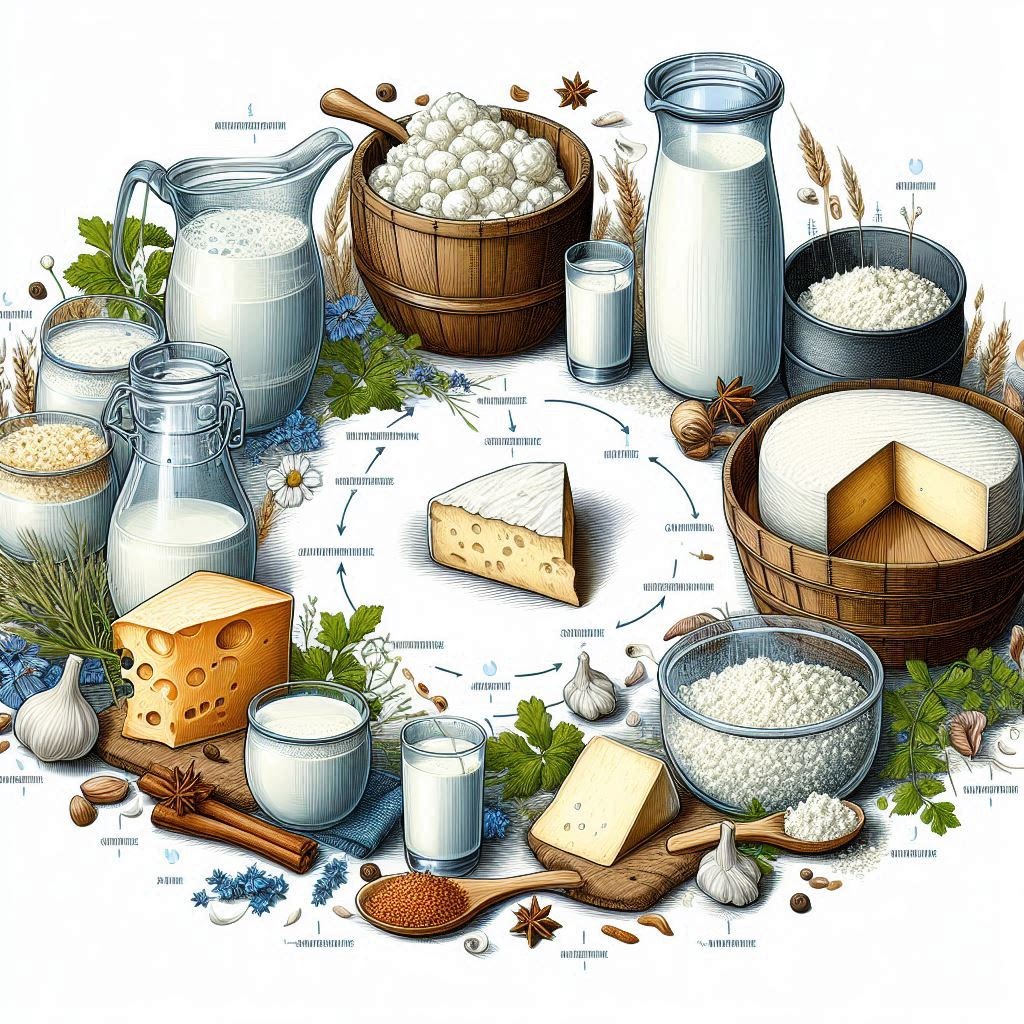
​Fermented foods include kimchi, various fermented soybean foods as sauces, salted seafood (such as pollack sikhae), yogurt, Turkish fermented mare's milk kumis, and German sauerkraut, and are lactic acid fermentation and malic acid fermentation.


The microorganisms mainly used in lactic acid fermentation are lactic acid bacteria (e.g. Lactobacillus), which produce lactic acid using sugar, so foods such as yogurt, kimchi, and vinegar can be said to be made through this process.


Meanwhile, alcohol fermentation is said to be mainly done by yeast (Mould). Malic acid bacteria are said to be used when making cheese.


The microorganisms related to kimchi are lactic acid (lactosis), a substance that accumulates in muscles when the human body is tired, and acidophilus in yogurt, and mold bacteria and lactose in cheese.


Meanwhile, lactose intolerance is a symptom in which the lactose-decomposing enzyme, such as lactase, is not produced, and thus food containing this substance, especially milk, cannot be digested. It is said to be relatively common among Koreans.


Trypsin (a type of amino acid essential to humans) inhibitor has an anticancer effect and helps prevent and treat cancer, diabetes, high blood pressure, and arteriosclerosis. A representative example is soybeans (a type of allergy-causing substance). This trypsin inhibitor is a phenomenon that occurs when the trypsin enzyme is produced in the stomach and needs to decompose proteins, but the enzyme's action is blocked, and the proteins are not sufficiently decomposed. Soybeans cause severe diarrhea when eaten raw.


This is because soybeans contain trypsin inhibitors that prevent the digestion of proteins, and it is said that they can be easily removed by soaking the soybeans in water and boiling them.


Like food, if people are completely rotted away like this, they are useless, but if they are properly ripened, fermentation occurs and they provide the nutrients that people need.

Sunday, February 23, 2025

Ganwoldo, located in Buseok-myeon, Seosan-si, Chungcheongnam-do.

1 Introduction to Ganwoldo(Island).

Ganwoldo used to be called Piando, and Ganwoldam was called Piansa.

Ganwoldam is a small hermitage located in Ganwoldo-ri, Buseok-myeon. It is said that it was founded by Great Master Muhak in the early Joseon Dynasty and rebuilt by Great Master Song Man-gong.

Unlike other hermitages, it is a mysterious hermitage that is connected to the land during low tide and becomes an island during high tide, so it feels like a hermitage floating on the water during high tide.

The surrounding natural scenery and the ancient temple where you can feel the breath of our ancestors are in harmony, attracting many tourists.

Also, the Gulburugi Gunwangje, which prays for a good harvest of oysters produced in Ganwoldo, is held every year on the 15th day of the first lunar month at high tide in front of the Ganwoldo-ri Eori Oyster Stew Monument. This event is held by clean women who have not committed any impure acts, wearing white clothes, dancing at the entrance of the village, and when they arrive at the oyster tower, they set up offerings and hold a ritual to pray for a good harvest of oysters. The oysters they harvest are also available for tasting by tourists.

It is said that it was built by Wonhyo Daesa, but its origin is unclear.

It was also called Yeonhwadae because it resembles a lotus flower floating on the water when the tide comes in.

In the late Goryeo Dynasty, Muhak Daesa was practicing here and suddenly became enlightened after seeing the moon, so the hermitage was named Ganwoldo and the island was also named Ganwoldo.


2 How to get to Ganwoldo(Island).

- Inquiry and guidance 041-668-6624

- Homepage http://ganwolam.kr/

- Address 119-29 Ganwoldo 1-gil, Buseok-myeon, Seosan-si, Chungcheongnam-do


3 The scenery of Ganwoldo(Island).


4 Map


Ice cream and shaved ice

 We live in temperate climates, so the four seasons are distinct. Summer is hot with monsoon rains, and winter is cold with snow.


This year, the year of Gapjin, was unusually hot and many people suffered, but it may be remembered as the coolest year when we look back on the coming year.


Compared to people living in tropical or cold climates, we experience a variety of weather, but the scenery, such as autumn foliage, is beautiful and the products are abundant, but on the other hand, it is annoying to have to change clothes every season.


It must not have been easy to spend the summer because of the long rainy season and the hottest days of summer like in the past, and although it is now almost a dead word, there was also the Samhansaon (三寒四溫) in winter.


There was already a stone ice storage during the Samhan period, and relics from that time still remain in Gyeongju, and relics can still be seen in Changwon, Gyeongnam, and Seoul.


During the Joseon Dynasty, ice from the Han River was broken and stored in the Seobinggo and Dongbinggo, and it was shared by the ministers on the hottest days of summer, when the heat was as hot as melting rocks, and it is said that they beat the heat of midsummer by putting it in cucumber soup and other foods.


In the 50s and 60s, ice cakes, which were ice water, appeared to whet children's appetites, but these days, it is no surprise that high-quality premium ice creams are appearing, moving away from the commonly called hard bar-type ice cream and container-type ice cream.


According to the Food Sanitation Act and the Food Code, ice cream is classified as livestock products and frozen confectionery is classified as food, so they differ depending on the amount of milk used.


The softness of container ice cream is created by a special process called overrun in the freezer (freezer), which involves blowing air into the processed product.


In the Book of Changes, the cycle of seasons is described as Ilhanilseo, which means, "The drum is struck by thunder and lightning, the wind and rain moisten it, and the sun and moon move, making it cold and hot at times." It is said, "The drum is struck by thunder and lightning, the wind and rain moisten it, and the sun and moon move, making it cold and hot at times."


In a time when physics and meteorology were not developed, it was difficult to recognize modern knowledge, but I am in awe of the fact that when food was the top priority, crops were planted and harvested (Gasaek:稼穡) at the right time without any gaps.

Saturday, February 22, 2025

Baeron Seongji(Holy Land) in Jecheon-si


1 Introduction to Baeron Seongji.

Baeron Seongji is a Catholic holy site from the late Joseon Dynasty located in Guhak-ri, Bongyang-eup, Jecheon-si, Chungcheongbuk-do.

As the persecution of Catholics began in the late Joseon Dynasty, Catholics began to gather in Baeron in search of a place to hide, and a Catholic village was naturally formed.

In 1801 (the first year of King Sunjo’s reign), during the Sinyu Persecution, Hwang Sa-yeong hid in a cave in Baeron and wrote a white paper, and was martyred by being executed in the same year.

From 1855 (the sixth year of King Cheoljong’s reign) to 1866 (the third year of King Gojong’s reign), Baeron Seminary, the first modern educational institution in Korea, was located in this area.

It is also the area where the grave of Choi Yang-eop, the first Korean student to study abroad and the second priest after Father Kim Dae-geon, who passed away in 1861, is located, and the birthplace of Nam Jong-sam, a martyr of the Byeongin Persecution in 1866, is located.


The Baeron Holy Land was part of the Gyeongseong Diocese in 1911, then the Wonju Diocese in 1968, and was developed in the 1970s to its current state.

After liberation, Baeron became an important holy land in Catholic history.

Within the Jecheon Baeron Holy Land, there are many religious facilities such as the Martyrs' House, St. Joseph's Church, the Hwang Sa-yeong Martyrdom Monument, the priest's residence and chapel, the Choi Yang-eop Memorial Church, and many auxiliary buildings, as well as a cloistered convent, and the Salesian House, a social welfare facility.

This is an important holy land in the process of establishing Catholicism in Korea, and even now, pilgrims from all over the country are constantly visiting the holy land.


2 How to get to Baeron Seongji.

- Inquiry and guidance 043-651-4527

- Website http://www.baeron.or.kr/

- Address 296 Baeronseongji-gil, Bongyang-eup, Jecheon-si, Chungcheongbuk-do (Bongyang-eup)

- Open year-round on holidays

- Parking available

- Experience guide retreat program

- Free admission (separate retreat program cost)


3 The scenery of Baeron Seongji.


4 Map


Kimjang kimchi and factory-made kimchi

 Kimchi is a representative Korean food and also a representative fermented food.

It is said that there are about 300 types of kimchi being developed in Korea, including napa cabbage kimchi, water kimchi, cabbage kimchi, bachelor kimchi, and green onion kimchi.


Recently, China has been labeling other countries as the country of origin under the name of Paichai, but historically and traditionally, it is definitely a traditional Korean food.


It is said that there is a similar sauerkraut in Germany, but it is completely different from kimchi seasoned with red pepper powder and salted seafood like in Korea.


If you look at the manufacturing process, it is first softened by the osmotic action of salt, which is called suffocation, and when it softens, the prepared kimchi filling is mixed in and various fillings are added depending on the region. Hairtail, squid, etc...


In the case of water kimchi, various nutrients are dissolved in the savory kimchi broth, and the taste of dongchimi broth eaten after breaking the ice in winter is truly exquisite.


In the past, when people were poisoned by coal briquette gas coming through the cracks in the door in the winter, they ate this dongchimi broth to regain their senses, but there seems to be no scientific basis for this.


The lactic acid bacteria in kimchi come from the fermentation process, and although it varies from person to person, I think the slightly sour taste is the true taste of kimchi.


​Recently, factory-made kimchi is popular among housewives, and pickled cabbage is also popular as an intermediate step.


When looking at the manufacturing process of factory-made kimchi, it is harvested in the highlands of Gangwon-do such as Pyeongchang in midsummer and in Haenam and Jindo in Jeollanam-do in winter, and then waited in a low-temperature warehouse, and when it is brought into the workplace, most of the cabbage washing is done by machine equipment these days, and bubble generators using ultrasonic waves are sometimes used. Most of them are washed only with water without using chemicals such as detergents, and then the cabbage is mixed by hand in the subsequent process to complete the process.

This can be seen as the result of mechanical handwork and chemical reactions, so it is born as a new substance through heterogeneous combination.

Friday, February 21, 2025

Mainly sold in PET bottles

 Our representative soft drinks are not that old. In the past, cold water floating in a gourd with a weeping willow tree was popular, but recently, it has been manufactured and produced in large-scale manufacturing facilities, leading to the emergence of health drinks, functional drinks, and even recently, bottled water.

The story of Kim Seon-dal, who sold the water of the Daedong River, has become a reality.

Bottled water is mostly underground bedrock, but in some cases, deep water from the sea is extracted, purified with RO, sterilized with ultraviolet rays, and filled into PET containers, and is managed by the Drinking Spring Water Act.

Our country has relatively deep bedrock aquifers and abundant groundwater, so this type of bottled water has developed a lot. Compared to Europe, where limestone is abundant and people cannot drink it as is, we can say that we are blessed.

However, we can no longer say that we are a country with abundant water resources because we are excessively extracting groundwater. As water resources are gradually depleting, it is time to prepare for the climate crisis.

However, although our country is said to be a country lacking water, this can be said to be the result of exaggerated propaganda.

The first beverage was cider, but its meaning is slightly different from that of the United States. In our country, cider means carbonated gas with sugar.


When it comes to health drinks, Bacchus is a must. When we were young and not well off, we always had a boiled egg and a bottle of cider when we went on a picnic. This is carbonated water in a bottle, unlike today's canned type.

In recent years, the shape of containers has become very diverse. Even for beverages, there were bottles, PP, PET, pouches, and aluminum cans, so each had a different purpose and use, but among them, PET (Poly Etylene Telethalef) is by far the most unique development. There have been concerns about the release of hazardous substances (PCBs), but PET, a material used for food packaging, is not considered to be a cause for concern since food companies receive and keep test results from manufacturers every six months.

Seongyojang House, in Gangneung

 1 Introduction to Seongyojang House, Gangneung.

Seongyojang House, Gangneung

Summary: An old house in Unjeong-dong, Gangneung-si, Gangwon-do.

Designated as a national folk cultural heritage on April 20, 1967.


This is the house where Lee Nae-ban, known as a local noble family, first lived and where his descendants have lived for generations. 

There are four buildings in total: Yeolhwadang, Anchae, Dongbyeoldang, and Hwalraejeong. It is said that the oldest Anchae Juok is the building where the residence was originally located, but this is not certain.

The Sarangchae, Yeolhwadang, was built in 1815 (the 15th year of King Sunjo’s reign) by Lee Hu, the great-grandson Lee Geun-woo who built Hwalraejeong the following year rebuilt it into the current building, and Dongbyeoldang was newly built about 50 years ago. 

The main building is on the east side, and the main building has an L-shaped floor plan, with the kitchen at the east end and the guest room on the west. 

A wall was built between the main building and the servants’ quarters, and the servants’ quarters are on the south side, and there is a tall gate to the Sarangchae to the west.


The Sarangchae stands on a high stone wall, and Dongbyeoldang is on the east front of the main building, and it stands on a high two-story stone wall. 

There used to be Seobyeoldang on the opposite side, but now only the site remains. Hwalraejeong is a pavilion built next to a large pond at the entrance to Seonkyojang outside the main gate. 

It has stone pillars erected in the pond and a railing surrounding it, and it is a hip roofed house with double eaves. It is located at 63 Unjeong-gil, Gangneung-si, Gangwon-do.


2 How to get to Seongyojang House, Gangneung.

- Address: 63 Unjeong-gil, Gangneung-si, Gangwon-do

- Business hours: Operating Closes at 18:00

- Phone number: 033-648-5303

- Price list: Adults 5,000 won, Youths 3,000 won, Children 2,000 won

- Guide: Hanok Stay Hong Ye-heon Building 1/2

- Guide to viewing the annex Thatched House Building 1/2 Experience

- Instagram: knsgj.net

- Designated Item: National Folk Cultural Heritage

- Designation Date: April 20, 1967

- Period: Joseon

- Type/Classification: Historic Building / Residential Life / Residential Architecture / House


3 The scenery of Seongyojang House, Gangneung.


4 Map


Thursday, February 20, 2025

Haksaru (pavilion) in Hamyang, Gyeongnam

 1 Introduction to Sungnimsa Temple.

Hamyang Haksa-ru is a pavilion located in Unrim-ri, Hamyang-eup, Hamyang-gun, Gyeongsangnam-do. It was designated as Tangible Cultural Property No. 90 of Gyeongsangnam-do on February 16, 1974.


It is believed to have been built during the Silla period, and it is said that it originally had a guest house as an annex to the government office, with Jeun-ru to the east, Cheongsang-ru to the west, and Mang-ak-ru to the south.

It was rebuilt in the 18th year of King Sukjong’s reign in Joseon, and moved to its current location in 1979.

Haksa-ru was mainly used by local government officials, and there is a story about when Choi Chi-won of Silla was the governor of Hamyang and when Kim Jong-jik of Joseon was the governor of Hamyang.

The zelkova tree of Hamyang Haksa-ru is designated as a natural monument and is protected.


2 How to get to Sungnimsa Temple.

- Cultural property classification number: Gyeongnam Tangible Cultural Property No. 90 (designated on February 16, 1974)

- Category: City Tangible Cultural Property No. 90 (Hamyang-gun)

- Name: Hamyang Haksaru

- Category: Haksaru Historic building / Residential / Landscape architecture / Pavilion

- Quantity/Area: 1 building

- Designation date: 1974.02.16

- Location: 4 Haksaru-gil, Hamyang-eup, Hamyang-gun, Gyeongnam (31-15 Unrim-ri)

- Owner: National

- Manager: Hamyang-gun

- For more information: Gyeongsangnam-do Hamyang-gun Culture and Tourism Division 055-960-5510


3 The scenery of Sungnimsa Temple.


4 Map


Love Potion Sweet Chocolate

 Chocolate is a type of sweet food. Even if it is not a special day such as Valentine's Day or White Day, it is often used when you are feeling depressed or when you need calories such as when hiking in the winter.

The prices of these products increased in the first half of 2024, and it is said that this is because the price of cocoa, the main ingredient of chocolate, has skyrocketed. Dubai chocolate, which was a flashy product for a while, is not chocolate but a processed chocolate product with nuts such as pistachios added.

Many processes are required to commercialize chocolate.

In other words, roasting, grinding, refining, conching, and tempering are required.


Cacao and cocoa are different. Cacao refers to the fruit of the cacao tree (i.e. cacao beans) before processing. Cocoa is made from this through fermentation, drying, and roasting processes to create cacao butter, cacao mass, and cocoa powder. Chocolate is a product made by adding sugar, milk, and flavoring to this cacao mass.

Chocolatis also well known as a symbol of love, and it is said that in the West, people ate chocolate before going to bed.

Black chocolate itself produces a lot of calories, so it can be used as emergency food when climbing mountains, and its melting point is low, so it easily melts at room temperature and becomes liquid, and it can absorb moisture, so separate packaging materials are sometimes used.

Melt means that a solid changes into a liquid, and conversely, liquid changes into a solid, such as water turning into ice, melted candle wax solidifying, or metals such as aluminum or iron solidifying.


In other words, melting means that a solid melts into a liquid, and sublimation means that a solid flies away into a gas.

Most of the world's substances are difficult to reverse irreversibly, but if we substitute time, it is a little different.

After a billion eons, the universe may not contract back to a single point and then infinitely cycle back to the Big Bang.

Wednesday, February 19, 2025

Subukjeong(Pavillion) in Gyuam Village, Buyeo

 1 Introduction to Subukjeong Pavillion.

Subukjeong stands tall on the banks of the Baekma River, listening to the loud sounds of cars.


This is one of the eight scenic views of Buyeo and is a place with beautiful scenery. To the east are Mt. Busosan and Naseong, and the Baekma River flows clearly beneath the pavilion.


This pavilion is said to have been built by Kim Heung-guk (1557-1623), the governor of Yangju during the reign of King Gwanghaegun (1608-1623) of Joseon, and is called Subukjeong after his pen name.


Kim Heung-guk was very close to Kim Jang-saeng, Shin Heum, etc., and Shin Heum's Eight Views Poetry Board of Subukjeong still hangs.


The Jaon-dae located below Subukjeong is said to have been passed by the king of Baekje when he went to Wangheungsa, and the rock would warm up on its own every time the king arrived, so it was named Gudeuldol.


It is called Jaon-dae according to this legend, and the handwriting of Uam Song Si-yeol writing "Jaon-dae" is engraved on the rock face.


2 How to get to Subukjeong Pavillion.

- Inquiry and guidance 041-830-6866

- Address Gyuam-ri, Gyuam-myeon, Buyeo-gun, Chungcheongnam-do

- Hours of operation Open all year round

- Holidays Open year-round

- Parking available

- Free admission


3 The scenery of Subukjeong Pavillion.


4 Map


Makgeolli, a refreshing drink that is good for your health

 Makgeolli(Korea Traditional Wine) is a popular type of alcohol, along with soju and beer.

<Source: Pixabay>

According to the Liquor Tax Act, alcohol is largely divided into alcohol, fermented alcohol, distilled alcohol, and other alcohol, and when taxed, it is imposed under the volume-based system and the ad valorem system. Fermented alcohol is usually made by fermenting alcohol, such as makgeolli or beer, and distilled alcohol is made by distilling this fermented alcohol in a ring.

This makgeolli hs also changed in various ways according to the times, and even soju is gradually decreasing from the highest 29 degrees. Recently, a dispute over makgeolli named after a celebrity was reported in the media at a brewery in Yecheon, Gyeongbuk.

In rural areas, it was known that a person who owned a rice mill that polished rice after harvest and a brewery that brewed makgeolli was a wealthy person, and local governments are sparing no effort in promoting local makgeolli brands.

Gamju, commonly known as Dansul, is similar in that it is fermented, but its purpose and method are different, and the mother liquor of Jeonju is also different.

The method of making Makgeolli is to make rice cakes with grains, add clear water nearby, add yeast, and leave it in a warm room for about 2 weeks. Then, the clear part on the top becomes Cheongju, and the part that settles to the bottom is called Sool Jigemi, which was used to feed children when there was not enough food in the past. I can't forget the taste of when I brought a jug of Yang to the brewery on my father's errand and drank it little by little.

Gayngju is a type of distilled liquor made by hanging it on a hook, and the method of making it has been passed down to the eldest son of the clan for generations. Hansan Sogokju, Andong Soju, and Jindo Hongju are well-known.

Alcohol should be like alcohol, and in ancient times, it was used to communicate with ghosts, but it gradually evolved to create excitement or relationships among people, so the fundamental purpose of alcohol is the best way to build relationships with people.

You should not get so drunk that you lose your sense of reason, and a typical example of this would be drunk driving.

Recommend Posts

US Territorial Expansion: From Alaska to Trump’s Greenland Ambition

1. The Core of American Identity: Endless Expansion What comes to your mind when you think of the United States? Most people think of freedo...